Starting a PCD pharma franchise business in India is one of the easiest ways to become your own boss in the healthcare field. You don’t need a big shop, a huge team, or years of experience. You just need the right pharma company, the right products, and a good agreement between you and the company. This agreement is called the PCD franchise agreement, and it is the most important paper in your whole business journey.
Before you start, it is normal to feel excited. New products, your own area to sell in, good profit margins everything looks great. But many people sign the agreement too fast, without reading it properly, and later face problems like hidden charges, no monopoly rights, or poor product supply.
A franchise agreement is basically a written promise between you (the franchise partner) and the pharma company. It tells you what the company will give you, what you have to do, and what happens if something goes wrong. When this agreement is clear and fair, your business runs smoothly and grows well for many years. When it is unclear or one-sided, it can create big losses later. So, before you pick up that pen and sign the agreement, you should check some red flags first. In this article, we will talk about them one by one, so you don’t make a costly mistake.
What Is a PCD Franchise Agreement and How Does It Work?
A PCD franchise agreement is a legal contract between a pharma franchise company and a franchise holder (that’s you). PCD stands for Propaganda Cum Distribution. In the PCD pharma franchise business model, the company gives you the right to sell and promote its medicines in a specific area, using its brand name.
The agreement usually includes things like:
- The area (territory) where you can sell products
- Whether you get monopoly rights (meaning no one else can sell there)
- List of products you can sell
- Pricing, margins, and payment terms
- Minimum order quantity or target
- Validity period of the agreement
- Terms for ending the contract
If you want to understand the full process step by step, you can also read our detailed guide on how a PCD pharma franchise works, which explains everything from start to finish.
Benefits of a Good Franchise Agreement

When your agreement is clear and fair, it brings many benefits for your future business:
Low investment, high return – You don’t need a factory or big setup.
Monopoly rights – You can be the only seller in your area, so less competition.
Trusted brand support – You sell products of an already known company.
Marketing help – Many companies give visual aids, samples, and promotional material.
Steady growth – With the right products and area, your business can grow year after year.
But all these benefits only come true if the agreement is written properly and both sides follow it honestly. This is why checking for red flags before signing is so important.
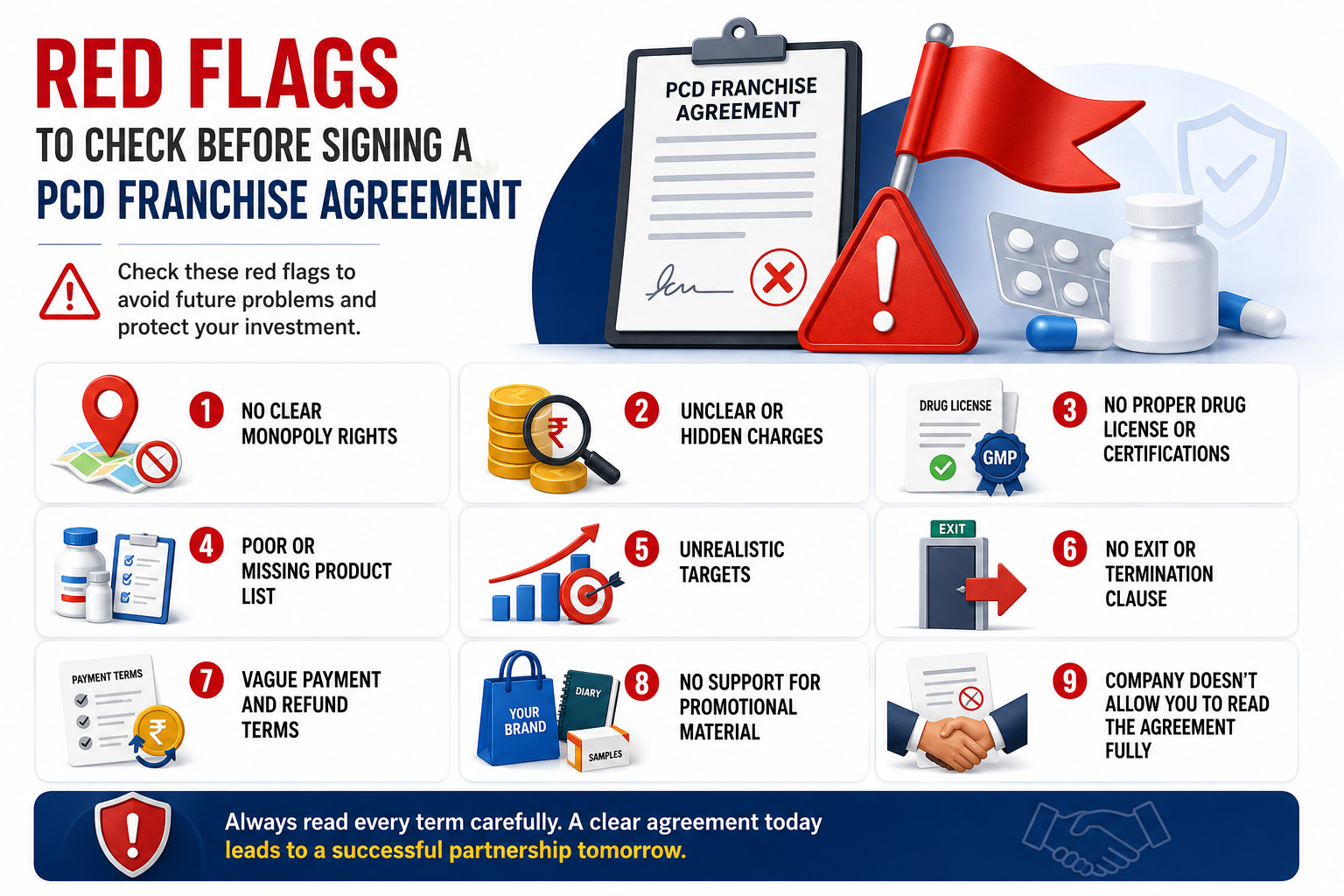
Red Flags to Check Before Signing a PCD Franchise Agreement
1. No Clear Monopoly Rights
One of the biggest reasons people join a PCD franchise is to get monopoly rights in their area. If the agreement doesn’t clearly mention your territory, or if it says the company can also appoint other franchise partners in the same area, that is a big red flag. Always ask for the territory details in writing.
2. Unclear or Hidden Charges
Some companies ask for extra charges later, like scheme charges, promotional charges, or renewal fees, which were never mentioned before. Read the payment section carefully. If something feels vague or “will be decided later,” ask questions before signing.
3. No Proper Drug License or Certifications
A genuine pharma company should have a valid drug license, GMP certification, and WHO certification (if claimed). If the company hesitates to show these documents, it is a warning sign. Never trust a company that avoids sharing its legal papers.
4. Poor or Missing Product List
The agreement should have a clear list of products, along with their composition, packing, and pricing. If the product list keeps changing or is not attached properly to the agreement, this can cause confusion and disputes later.
Also Read: Fastest Growing PCD Pharma Franchise Niches
5. Unrealistic Targets
Some companies set very high monthly or yearly sales targets just to trap you into buying more stock. If you fail to meet the target, they may cancel your franchise or take back your monopoly rights. Always check if the target mentioned is realistic for a new business.
6. No Exit or Termination Clause
A good agreement always tells you how you (or the company) can end the contract, and what notice period is required. If this part is missing, you could get stuck in a bad deal with no clear way out.
7. Vague Payment and Refund Terms
Check how payments work – advance payment, credit period, and refund policy in case of damaged or expired stock. If these terms are not written clearly, you may face losses later without any support from the company.
8. No Support for Promotional Material
Many companies promise free visual aids, MR bags, sample medicines, and diaries, but don’t mention it in writing. Get everything on paper – verbal promises don’t count in business.
9. Company Doesn’t Allow You to Read the Agreement Fully
If a company is rushing you to sign quickly, without giving you time to read or ask questions, that is a serious red flag. A genuine company will always give you enough time to understand the terms.
Also Read: Documents Required For PCD Pharma Franchise in India
Final Thoughts
Signing a PCD franchise agreement is a big step towards building your own pharma business. It can bring great profit, brand value, and long-term growth, but only if you choose the right company and read the agreement carefully. Take your time, ask questions, check all documents, and watch out for the red flags mentioned above. A little carefulness today can save you from big losses tomorrow, and set you up for a strong and successful pharma franchise business.